All of the following ratings are on the guidelines of the BBFC (British Board of Film Classification.
U
The U symbol stands for Universal. U films should be suitable for audiences aged four years and above. A U film will generally contain positive messages about loyalty, honesty and friendship. The film may well have a happy ending for the child and the overall tone should be one of reassurance. U films will not contain any issues of discrimination, drugs, bad behaviour, swearing, nudity, sex or violence as it could encourage the children to do this things. An example of a U rated film would be Cars.
PG
The PG symbol stands for Parental Guidance. This means a film is suitable for general viewing, but some scenes may be unsuitable for young children so parents should be supervising children under the age of eight. There may be mild bad language such as ‘s*it’ or ‘son of a bitch’ in a PG film.
12
The 12 symbol means that only people above the age of 12 will be able to watch this film. The film will sometimes contain mild violence and mild uses of bad language. The most common genre of the "12" category is either action or thriller. These films tend to consist an agonist and a protagonist that suits the nature of 12 year olds, so super heroes such as Spiderman and his nemesis the Green Goblin.
15
The 15 symbol means that only people above the age of 15 will be able to watch this film. The film mostly contains violence and bad language, and also features mild nudity (depending on the story line of the film). The most common genre of the "15" category is either adult-based comedy or thriller. So a film that comes to mind when thinking of this rating is the "Hangover" trilogy.
18
The 18 symbol means that only people above the age of 18 will be able to watch this film. Films rated 18 are only for adults. No-one under 18 is allowed to see an 18 film at the cinema. No 18 rated films are suitable for children under the age of 18. 18 rated films contain very strong violence, frequent strong language like 'f*ck' or very strong language e.g. ‘c*nt’ or strong portrayals of sexual activity. Films that are rated 18 are 'Lets be Cops'
This
is the bus stop in our film where our main character originally sits down at
whilst reading the newspaper in which he spots the article explaining about the
escaped prisoner.
This
is our second setting; this is an old car mechanics opposite the bus shelter.
In our 1st shot of the mechanics our main character spots the
prisoner in typical orange prisoner uniform at the back of the mechanics. This
is followed by a 2nd shot of the same area where the prisoner has
moved and now appears on the grass directly opposite the man after he done a
double take of the area.
Our
next setting involves the main character walking extremely fast and looking
over his shoulder as he realizes the prisoner is fast approaching him. When he
gets to the door of the building he tries to get his keys out of his pockets
but he is shaking due to the terror of being followed. He drops the keys when
panicking and momentum builds up as he goes on the floor to pick them up but
when he turns around the music stops and he breathes a sigh of relief as the
prisoner is nowhere to be seen.
This
is also our final setting and where he drops his keys.
After
he breathes his sigh of relief, the entire atmosphere becomes relaxed to suit
his mood. However still on the floor, he turns around and faces the door again
to open it nice and calmly when he is shocked by the sight of the prisoner
standing in front of his way to get in the door.
For our film, we have chosen multiple locations that we feel will fit our story line very well. Our story line is about Paranoia, and our locations are almost identical to our storyboard.
Our first possible location is at a bus stop in Halstead, Essex (Below) outside our local "Public Gardens". We feel that at night, this area could seem rather mysterious/creepy due to the darkness, and could create the ambiance needed for this short movie. The main character will be sitting on the bench and reading the newspaper, as seen in the storyboard in the blog.
The other scene that will feature in our short movie is planned to be directly opposite no matter what location we use in the end. The "bad guy" will stand on this pathway and will stare at the person sitting on the bench. At night this location will also be mysterious which will lead to the viewers wondering who this man is.
The Joker: The Joker is a sadistic super villain that's goal is to defeat the Batman. His outfit is irregular compared to a normal citizen. He uses physiology to get into peoples heads and control them. His make up hides his identity, but yet also helps to show his true insanity. Unlike most super villains, The Joker doesn't have a physical special power or weapon, but he utilises his main advantage which is his brilliant ability to control a whole city on his own. He sets out a plan and lets the citizen destroy their own city. For instance, he puts people in a situation where they have to make a choice. The dilemma is that there is two ferry's in the bay. One ferry is full of prisoners, and the other is full of ordinary citizens. Each boat has a trigger that blows the other boat up. If no one blows one of the boats up inside 15 minutes, they both blow up. This challenges the humanity of both the prisoners and citizens, yet the Joker didn't have to do any of the dirty work by himself.
Costume: The Jokers costume is unique in that the colour scheme and style of it is very unusual. Purple and Green are two colours that you don't regularly see together, so this instantly makes the viewer realise that The Joker is very unusual. Another thing that makes him unusual is his iconic face paint. Throughout the world, this style of face paint is recognised as The Joker. His devious ways and manipulative personality are 100% shown by his costume.
Memorable Quotes: "Why So Serious?" / "If you're good at something, never do it for free" / "I don't want to kill you! What would I do without you? Go back to ripping off mob dealers? No, no...no you complete me." / "Madness, as you know, is like gravity. All it takes is a little push." / "I believe whatever doesn't kill you simply makes you...stranger."
In our film, we have made the decision to make our main character wear a suit for numerous diverse reasons, one of the main factors in making this decision was that we wanted our character to come across as a wealthy family man to show that no matter how good your life situation is you can still fall victim to life's evils such as paranoia. Furthermore, we wanted our character to be relatable to our audience and office jobs make up a large percentage of the current populations work.
We took inspiration from numerous films including Batman where Bruce Wayne is the most decorated character and wears suits to show his wealth and everyday lifestyle before he becomes Batman when needed. The appeal of this is that the audience believe that every individual has the ability deep down to save lives and change the world, consequently making a personal connection to the character.
Another role we had to fill was the villain who in our case was a prisoner on the loose who the main character, our main in the suit, believed was doing the frightening duty of following the villain around and scaring him. We chose that our prisoner should have the costume of Black t-shirt/vest and Black trousers in order to give the instantaneous view that he has a dark personality which is associated with numerous criminals or potentially harmful people. One of the Shows we took inspiration from was Bates Motel.
Date: We have chosen Wednesday 26th November as our selected date to film. We picked this date as we were all free and our actors were available. Our decision to film after school is strategic because we want the dark lighting in order to create a sinister and spooky atmosphere which coincides with the winter weather. Characters: We will spend an hour before filming sorting out our characters costumes in order to create individualised identities for them. Our characters are played Alfie Wyand-Brooks and Jack Berkeley. Make up: In our hour preparation time our makeup team will darken the eyes of the evil character in order to keep the dark atmospheres. Location: We will go to Rippers alley which is within walking distance of the school to begin our filming and make our way down from there to the Station Road bus stop.
We have looked at many different kinds of thrillers, and paid close attention to the background music and the soundtracks.
The reasons on why we have chosen this soundtracks is because we think they add tension to the film. We have also put them on here because they have inspired us for our soundtrack for our film.
This soundtrack is called sky fall. The reason on why we like this soundtrack is because of the fact that it creates tension and when this soundtrack comes on, you instantly start thinking of James bond and guns. This soundtrack is catchy and will be stuck in the viewers head.
This soundtrack is called tiptoe in the tulips. Its creates a distinguished, mysterious and frightening vibe. Contrapuntal music; that doesn't fit with the film.
This soundtrack is call psycho. It is a world renowned thriller soundtrack and has earned this tag due to the features it has in it. One of the most noteworthy good points of this track is the fast paced, sharp screeches to start it off with as it adds a exaggerated and heightened sense of danger to the film. This is followed by a deeper, lower tone which carries the mysterious vibe across the entirety of the film.
These are our original ideas for our potential thriller films. We looked at a diverse range of thriller based films and tried our utmost to come up with ideas that we could use when we begin the stage of coming up with/inventing our own film ideas. Our main topics were Paranoia, Kidnapping, Dead body and Hit man; all of these have qualities that are very much appealing such as the mystery atmosphere that can be brought through the dead body and the paranoia based films. Additionally, the kidnapping and hit man ideas allow the use of guns and shoot offs which create dramatic scenes which has continuously been used by film directors throughout the years to engage the publics attention due to its fast paced, expensive and dramatized feel.
We asked multiple people, that haven't studied media, some questions to do with the conventions of Thriller films. We will go on to use this research towards our own Thriller film.
Q. What would you expect the colour schemes to be like in a typical Thriller film?
A1. Dark colours such as greys, browns and blacks
A2. The colours would be rather dull, and films such as Heat (1995) have a blue tint to the camera shots.
A3. I would expect that the colours wouldn't be very interesting, and this helps to set the mood of the film e.g. if the colours are dull, you would expect a serious storyline, typically crime based films.
Q. What sort of settings would you expect from a typical Thriller film?
A1. Usually it is in a city as typical Thrillers tend to be crime.
A2. It depends on the storyline, but most of the time it is either in a big city or a rural area.
A3. Somewhere either very quiet, or extremely loud, for instance the capital of a country or a rural forest.
Q. What are the typical soundtracks like in a Thriller film? (Slow/Medium/Fast pace)
A1. The most recent successful soundtrack of a Thriller was Adele song "Skyfall" from the James Bond film, "Skyfall". It was a very successful medium pace song that played before the movie began. It helped to create an atmosphere for what the film was going to be like. A2. Slow paced music as it helps to set a serious/scary/dramatic atmosphere, and this helps the audience to understand instantly that the film is going to be a Thriller. A3. Fast paced because it helps to add tension, especially when it is played at the beginning of the film over the titles.
We have searched up different types of thrillers and we have examined the set target audience. The target audience for ‘Goodfellas’ would range from teenagers to middle aged men. This film wouldn’t appeal to women as most of the film has violence in it and strong language. Gangster films are very male dominated and ‘Goodfellas’ shows this idea and all of the characters in the opening scene are male.
The target audience for 'se7en' would range between teenagers to middle aged men, just like 'Goodfellas'. This film wouldn't appeal to women because of the fact that 'Se7en' is a gory film and a lot of scenes with blood in. The two main characters are Brad Pitt and Morgan Freeman.
Plot: Generally, thrillers show justice and injustice (or good and evil) fighting against each other, with an overall feel of suspense. Most often, the identity of the antagonist is known and the protagonist must intervene with their plans; a thriller movie usually has a growing sense of threat and/or danger and there is a clear sense of pursuit, although they sometimes begin with an overall degeneration of events
Narrative: (points of view; events) The story of a typical thriller film will usually be shown from the protagonist’s point of view, following events that the heroes must overcome. This point of view allows the audience to become more involved in the events themselves and therefore closer to the characters, as they see how the characters interact with each other in different situations. However, other points of view are sometimes included in the telling of the plot: often they will be short clips from the villain’s point of view, allowing the audience to see how the antagonist acts while by themselves, or how they used to act (i.e. in a flashback), which creates empathy for the villain and possibly allows the audience to understand why they have become the evil party. Depending on the character that plays the villain or how much is revealed to the audience, a sense of guilt can also be created.
Characters: (dress; typical roles) The two main characters (antagonist and protagonist) in a thriller are set apart from each other in the way the audience views them. The heroes in thrillers are often men that are accustomed to danger in their jobs or lifestyles (i.e. policemen, spies, etc.) or are ordinary citizens that have been pulled into danger by accident. The male hero usually has an aim to defeat the evil of the situation and will persevere even if nothing is going according to plan. The villains in thrillers are also typically men, usually tall and/ or well-built, and with a shady sense around them that gives the impression that they shouldn’t be trusted. This character may have some physical deformity (if their identity is secret for the majority of the film), or a traumatic experience that has changed their outlook on life or humanity. Usually they will work alone.
Iconography: (setting; mise-en-scene; props; colours) The typical setting of a thriller is in an urban city. Usually the main colours used will be grey, black and white to emphasise the helplessness of the first character we see. Thrillers can also be set in quiet country villages, where everyone leads poor and simple lives; often the villain will come from a small village. Usually only a small range of colours will be used, the main being black or grey if it is set in a city environment, to show how normal and mundane life is. However other strong colours are often used at particular plot points; for example if there is a lot of blue we can assume that someone has or is going to die, and if there is a recurring theme of red (i.e. alarms) then we understand the characters are in danger.
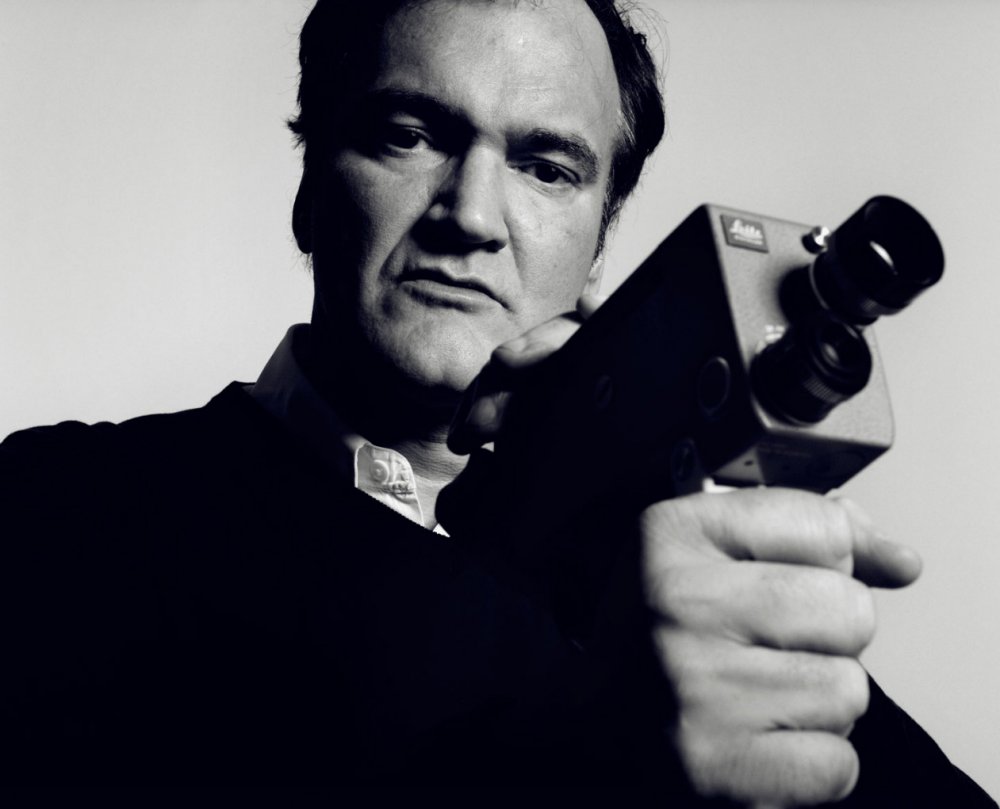
Quentin Tarantino jolted onto the Hollywood scene with his screenplay for True Romance, before getting involved in the thriller genre by directing the early 1990s films Reservoir Dogs and Pulp Fiction.
QUICK FACTS NAME
Quentin Tarantino
OCCUPATION
Film Actor, Television Actor, Director,Producer, Screenwriter
BIRTH DATE
March 27, 1963 (age 51)
PLACE OF BIRTH
Knoxville, Tennessee
FULL NAME
Quentin Tarantino
James Cameron
James Camerons directional efforts have grossed around $6 million worldwide. He is also the man who created the eye capturing, mouth watering and game changing "Terminator" Film sequence.
QUICK FACTS NAME
James Cameron
OCCUPATION
Film director, conceptual artist, producer, editor, screenwriter, environmentalist, explorer
In this post, I will be analysing the camera angles of the classic Thriller/Horror movie, Psycho. I will be explaining how the camera angles portray emotions, and how power changes from character to character throughout the scenes.
After the opening titles, an establishing shot is used to set the scene. It shows a crowded city in the middle of the day. This isn’t what we would usually expect from a thriller setting, as typical characteristics consist of low lighting, Isolated settings and it being set in the evening. This shot pans to the outside of a window where we expect to be introduced to a main character. The pan shot gives time to the audience to anticipate what is going to happen, but to also make them think that the “psycho” is maybe somewhere within this city.
This shot shows Marion hidden in a bathroom obtaining stolen money from her purse. A high angle shot shows her vulnerability and weakness in the situation, and we predict that her criminal actions will detriment her continuingly through the film. Alternatively, the high angle shot is placed in a position where the audience feels like an intruder as we see an action happening that no other character is yet aware of. This creates a connection between the audience and character and makes us feel important than the rest of the characters as we are informed of Marions actions.
A medium close up shot is used to show the character’s worried expression as the non-synchronous sound of her boss fitting the pieces together and figuring out that she has stolen the money is heard. The biting of the lip could suggest the characters apprehension and maybe regret of stealing the money. Alternatively, it could suggest her concern about being caught. Her rigid position again shows the exposed fret that she is feeling, also making the audience feel tense and uneasy.
This shot is a huge contrast to the first establishing shot showing a crowded city with natural lighting. This shot complies to the typical conventions of a thriller setting with little lighting, set in the night time and seeming quiet and remote, with the rain also adding to the mood. This is when we realise that this location might be where an antagonist reveals themselves. The only source of light is coming from one room within the house and this is where our focus immediately goes to as we want to know who exactly is in the house.
An over the shoulder shot reveals Norman uncovering a hole in the wall, that leads to the cabin Marion is staying in. This action is when we figure out that there is more to him than meets the eye. The first impressions we get from this character is a shy, timid man who is slightly awkward but innocent. This shot unearths a different side to his personality adding a mystifying element to him. This is the moment when his character becomes more important and disturbing character. The over the shoulder shot makes the audience again feel like their intruding adding a tense atmosphere to the scene.
A two shot is used when the bathroom door suddenly swings open to reveal a shadowy character. By using this shot, it makes the audience anticipate what we all believe is going to happen next. The tense and anxious atmosphere is emphasised by the fact that the shower is the only sound we can hear. The clear shower curtain allows us to foresee the next event however not who is carrying it out. This still keeps a sense of ambiguity for the audience, making it more appealing to watch as we think we are seconds away from finding out who exactly is behind the curtain.
When the shower curtain is opened the camera zooms quickly, ending up at amid shot of a shadowy figure holding up a knife. As soon as this happens it is accompanied by dramatic violin incidental music which adds to the audiences reaction making it more frightening. The use of no lighting on the silhouette keeps a sense of mystery to the killer, this makes the audience more intrigued to finally find out who the killer could be. The background light is almost used to blind the audience from seeing the killer as well as Marion. The use of one light again creates a more dramatic and theatrical shot.
We have looked into a number of thriller film to get an idea of what we might use to make our own. Some of the film we looked at like a thought we could use for our film were Paranoia, Good fella's, Seven and The Bridge.
What we liked about Paranoia we the setting and the hole storyline of the film. We liked the beginning of the film when he is sitting on a train reading the news paper then when he looks up he see's someone who looks like a wanted and dangerous person. We like the start of this film and we might replicate the beginning of this clip.
Another film that we liked was Good fella's. The reason on why we like this film is because at the beginning of the film when the credits are showing, you can hear a car engine playing throughout the credits. We liked that idea and we might use something similar at the beginning of our film to set the scene.
There are numerous different aspects that are used frequently in a diverse range of thriller films that make up the contents of a typical thriller film.
In a typical thriller film I would expect to see intense music starting right from the introductory period of the film, this is typical in films such as Inception where the music uses loud, bold sounds with a low base in order to create a deep suspense around the scene which consequently helps display the dark and dingy atmosphere required for a thriller.
Another strong convention into the field of thriller movies is the standard range of camera shots that appear in most thriller films. Due to the majority of thriller movies involving the hero who has the viewers on their side and the villain. In a lot of thriller films they try to let the audience know early on about the roles the characters fulfil. Low angle shots of the villain are often used to display their importance and power. To establish the scene in a thriller, they use establishing shots commonly or long shots of a character which also show the surrounding area which helps set the scene instantaneously to the audience.
Additionally, there are typical settings which come as part of a thriller film a large amount of the time, due to the way they need to display danger, weariness and a depressing atmosphere, they often film at night or when it is raining/bad weather. Furthermore, settings such as train stations, street alleys and abandoned buildings.
The initial 35 seconds of the Dark Knight Rises focuses predominantly on establishing the scene and building suspense for the following narrative, using conventions of the thriller genre. The establishing shot at the beginning of the scene sets the theme of isolation for the rest of the scene; a key component of thriller movies. In doing so, the audience know that if something was to go wrong, there would be no one around to help, showing this is a dangerous situation and therefore building suspense.
This is followed by a long shot of a Government agent. The agent’s clothes represent him as a weaker and vulnerable character due to the mellow connotations of the colour blue – a common representation for the victim in a thriller movie. However, this is a sharp contrast from the middle ground behind him; the armed guards represent him as a powerful character with a lot of authority, due to the connotations of violence and murder connected to guns. Finally, the camera slowly moves towards the Government agent during this section of the scene, placing a further emphasis on his role in the narrative.
At 15 seconds of the way through the opening scene, the focus is placed on these three character. They are represented in such a way that it is clear to the audience that one of these will be the villain of the movies. For instance, this section of the scene uses darker colours because dark colours have connotations of evil, mystery and a possible threat, these characters are represented as such. This follows the thriller convention of displaying the villain in dark lighting.
The conventional thriller theme of entrapment is shown in the confinement of the space they are in – the characters are pushed against each other due to the lack of space. They also fill the space they are in, representing them as key characters in the narrative. For this reason, a lot of mystery shrouds the narrative because the two concepts of them being the villain but at the same time being trapped doesn't represent them as a threat: how can they cause any hard while they are trapped? This engages the audience with the narrative. Furthermore, the diegetic music during the opening few seconds gradually builds – another typical thriller convention which this time builds suspense for when the mystery clouding these three characters is revealed.
At 0:54 seconds through the opening scene, the representation of power in the government agent is once again reaffirmed, but this time shows the presupposed villains in the shot also. The theme of confinement and entrapment also become more prevalent due to the small space inside the plane, raising the tension of the scene because there is it becomes more apparent there is no escape should something go wrong. Themes of death and murder are emphasized in this section of the scene. The middle ground and foreground are used effectively to clearly represent the current power imbalance between the presupposed villains and the Government agent, due to the villains being lower down in the shot. This imbalance forces the themes of death and murder due to the more powerful character (the Government agent) holding the gun which carries connotations of violence, aggression and, of course, death. Death and murder are typical thriller themes, following the conventions of thrillers once more.
At 2:54 seconds, the audience can appreciate the enormity of the situation. The establishing shot shown above represents the power Bane now has over the situation, represented in the size difference between his plane and that of the Government. It reaffirms the themes of death and destruction because of how real the situation is becoming, as shown in this shot. It also continues the deception, because the amount of power Bane had over the situation was, as previously mentioned, made to appear minimal when actually at this point it is very clear he has a lot. Furthermore, the diegetic music now changes to a piece with a faster pace and increased volume, with sharper notes played on violins. From this point on wards, very quick bursts of action are shown instead of long, drawn out monologues. When these to features of the scene are combined, the overall pace of the scene is increased, emphasizing the action and therefore danger/risk of death within the scene. This follows thriller conventions due to the typical narrative of death.
The greatest example of Bane’s power within the scene is shown at 3:41. A point of view shot now places the audience directly below him, once more emphasizing his power and control over the scene. It also makes the audience appreciate the fear that any remaining survivors must feel because they are in the same position that character is in, making the threat Bane poses even greater. A camera shake is additionally used in conjunction with the low angle shot to further the powerful representation of Bane, because it makes him seem so much bigger than he actually is. As well as this, the music stops for this section of the scene, allowing all the focus and appreciation to be placed upon this representation of Bane and nothing else. It is a crucial part of the movie to foreshadow Bane’s character for the rest of the film, and is done by giving a lasting impression.
!The clip we used to analyse this is attached below!
We have searched into a lot of thrillers which include films like Seven, The Bridge and Heat, but what had the most impact on us and the one that had caught our eye was 'Paranoia'. This is about a man in a train station reading his news paper and the headline was about someone escaping prison and is on the lose, then when he looks up, he see's someone how looks extremely like the man who had just came out of prison and consequently the individual who is looking at the newspaper starts to panic. The reason why this film gained our attention is because it is a simple but effective storyline which we fill can captivate the audience.
Moreover, another film we had studied for inspiration is 'the final destination series' and one of the reasons why we were inspired by these films is because of the variety of flashbacks before the event has taken place. We fill that this adds an ominous and scarce atmosphere to the movie.
Also, in a lot of these films they use a dark and dingy colour scheme in order to create an atmosphere to suit the theme of the film.
The film “Goodfellas” was released in 1990, and directed by renowned Italian American director Martin Scorsese. The narrative follows the main character Henry from his late teens, building up to his career as a professional criminal associated with the mafia. The opening scene is a harrowing and graphic example of the casual violence that surrounds Henry. The disturbing reality depicted in this opening scene has what has made it particularly iconic in the Gangster genre of film.
The first shot of the film is of a black background with the credits. Minimal wording appears on the screen, and the words quickly slide across the screen from the right in a large white font. The word that has just slid across the screen then reappears in a smaller white font, and stays still until it is replaced by the next larger word sliding across. The sound, that goes with the word transitions is presumably diegetic traffic noise, and gives the viewer an idea of the setting. The final sentence that the audience see on this background is “This film is based on a true story” this is used to get the viewer instantly believing of the story and the characters portrayed within it.
The first opening shot containing real images is the tracking shot of the car driving down the road in the darkness. The shot instantly promotes a foreboding atmosphere that is consistent with the gangster image. This shot pans left and comes alongside the car, giving the viewers the impression that we are following the car, and that the characters inside the car are perhaps key to the story.
When the audience eventually sees inside the car there is a medium close up of the driver, although we can see two other men in the car. The focus on the driver gives the audience a subtle hint that he could be the main character. The next shot of note in the scene is when the men get out of the car to investigate the noise in the boot. The shot is a low angle of the characters in side profile, for the viewers looking up at them, it shows the characters have an authoritative and controlling air about them, which makes them more believable as gangsters.
There is then the gradual close up to the boot of the car; the camera zooms in to the source of the noise like a person reluctantly going to open it. This cuts to a medium shot of all three of the men that gradually zooms in on the two holding weapons, who obviously getting ready for a confrontation. The man holding the shovel nods to the character who is out of shot, then the camera pans round to focus in on the un-armed man to reveal the contents of the car. The camera moves slowly again here to convey the trepidation that all of the men are feeling towards having to deal with whatever is making the noise in the back of the car. Also from an audiences point of view this creates anticipation through the build of tension. The scene ends with a still of who we can assume to be the main character, slamming the boot shut in time with a song from a typical 50s Italian American singer Tony Bennett. This is appropriate as the 50’s is a time in history, often thought of as the peak of the American Mafia’s powers. The song is also contemporary to the setting of the next scene.
The editing throughout this scene maintains a slow pace, to ensure the build up of tension. However, the level of tension that the audience may feel as the scene develops is not matched by the characters involved, as they remain stony faced and uncaring throughout. The type of shots used also effect the time between cuts, as the panning shots, tracking shots and shots that slowly zoom in from medium to a close up, prolong the time that the audience has to wait to find out what is making noise in the boot. The editing during the kill follows the same slow pattern to expose the audience to the brutal realism of the world that the characters inhabit.
The costume and general style used in this scene is typical of the Gangster genre. All three characters swear crisp neat suits, and have hair that has been combed back in a style dating from around the fifties. Other iconic films such as “The Godfather” and “Scarface” support this smart wealthy image of Italian mafia gangsters. The lighting and setting, aside from the smart suits and haircuts, supports the secretive nature of the events that are taking place. The lighting is minimal, with only the car headlights to light the murder scene, and presumably streetlamps that light up the inside of the car at points. The lighting is deliberately dark because as I have said, the characters are trying to hide their criminal activities and do not want to be seen. However, use of a torch by the men or any other lighting device would have an inappropriate and unrealistic prop given the circumstances. The weapon props however are realistic and are used to define the brutality and the ruthlessness of criminals of that level. The carving knife, the shovel and the gun all appear in this scene to show that whatever is in making noise in the boot will die very painfully, thus the trepidation in the camera work.

 PG
PG